


The History of Afternoon Tea: From Aristocratic Indulgence to Modern-Day Ritual
Updated: Aug 16
If you’ve ever wondered about the history of afternoon tea, you’re not alone. The ritual of sipping hot tea while enjoying delicate sandwiches, scones, and pastries feels timeless—but it actually has a fascinating backstory. Let’s explore where afternoon tea came from, the difference between afternoon tea and high tea, and why this tradition continues to enchant people around the world.
Who Invented Afternoon Tea?
Afternoon tea as we know it today is often credited to Anna, the 7th Duchess of Bedford, in the early 1840s. During this era, the upper classes typically ate just two main meals: a late breakfast and a lavish dinner served around 8 or 9 p.m. By mid-afternoon, Anna found herself hungry and asked her staff to bring her tea and light refreshments—bread, butter, and small cakes.
Her friends soon joined her for this elegant pause in the day, and afternoon tea quickly spread across British high society as a fashionable social event.
What Is the Difference Between High Tea and Afternoon Tea?
Many people use the terms interchangeably, but they’re not the same:
Afternoon Tea (Low Tea): The traditional elegant gathering featuring finger sandwiches, scones with clotted cream and jam, and pastries, served mid-afternoon at low lounge tables.
High Tea: A heartier evening meal eaten by the working class at the “high” dinner table, with meat pies, bread, and more filling dishes.
So if you’re enjoying cucumber sandwiches and dainty desserts, that’s afternoon tea—not high tea!
The Traditional Afternoon Tea Menu
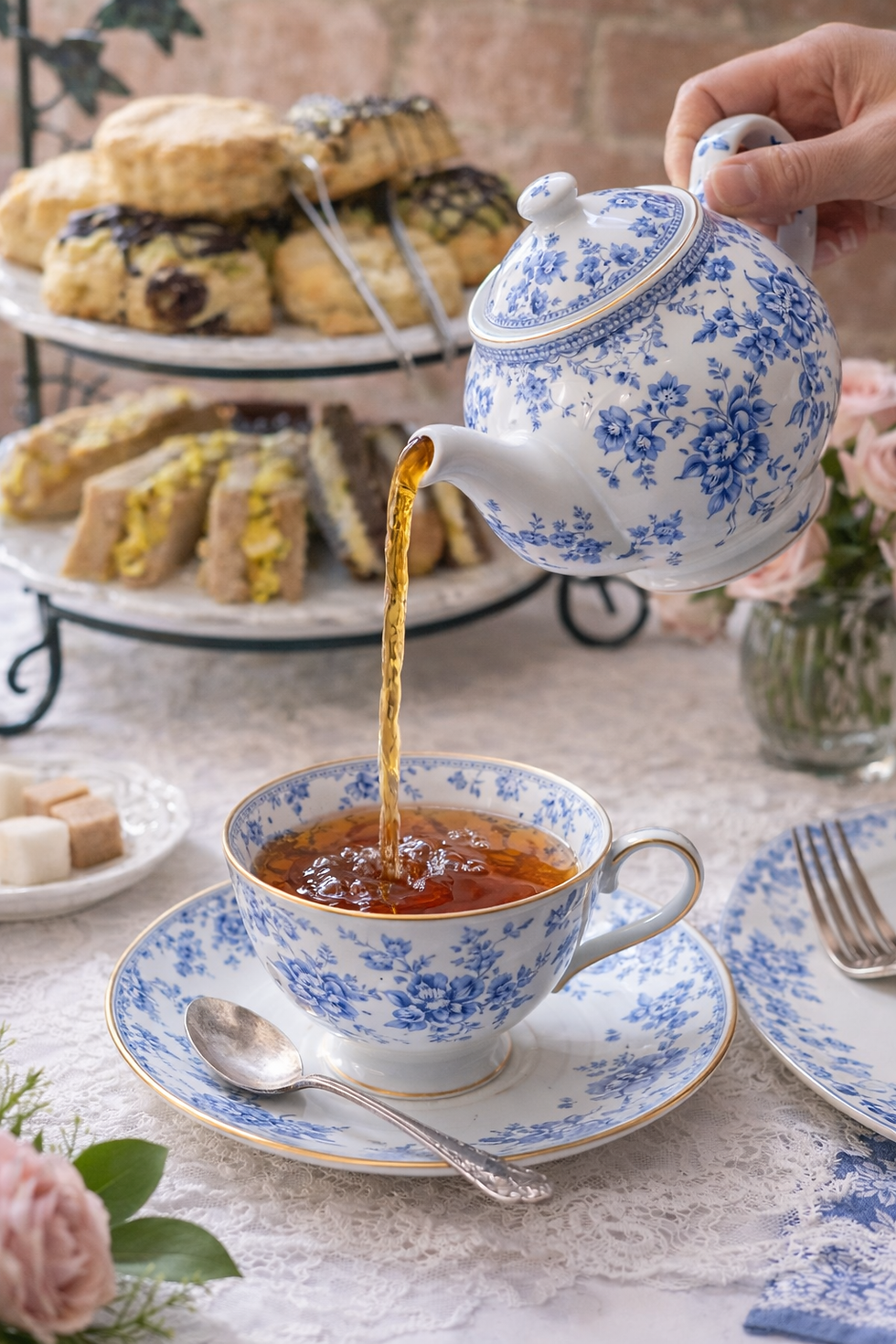
A classic afternoon tea menu has three main tiers:
Savory Finger Sandwiches – cucumber, smoked salmon, egg salad, or chicken salad.
Freshly Baked Scones – served with clotted cream and jam.
Sweet Pastries & Cakes – from Victoria sponge to petits fours and tarts.
This combination of light bites made afternoon tea both refined and satisfying. By the late 19th century, tea rooms in London began offering the experience, making it accessible to the rising middle class as well.
Afternoon Tea in Modern Times
Today, afternoon tea has evolved into a global experience. Hotels and tearooms around the world serve traditional and themed versions—think holiday teas, literary teas, or champagne teas. Many hosts (like at Tea with Meredith) add modern touches, using local, seasonal ingredients and creating menus that celebrate creativity while honoring tradition.
Why Afternoon Tea Remains Popular
So why does afternoon tea still feel so magical? It’s not just about the tea or food—it’s about the ritual of slowing down, connecting with friends and family, and savoring the moment. In our fast-paced world, an afternoon tea gathering is a chance to indulge in beauty, conversation, and timeless elegance.
✨ Next time you enjoy afternoon tea, you’re not just having a snack—you’re taking part in a tradition with nearly two centuries of history.
Ready to Plan Your Tea Party?
Tea with Meredith specializes in elegant afternoon tea experiences for birthdays, bridal showers, baby showers, and private gatherings throughout Westchester County, NY.
Start planning your event today:www.teawithmeredith.com/planyourevent
Inspiring Connections. Celebrating Life.


Comments