


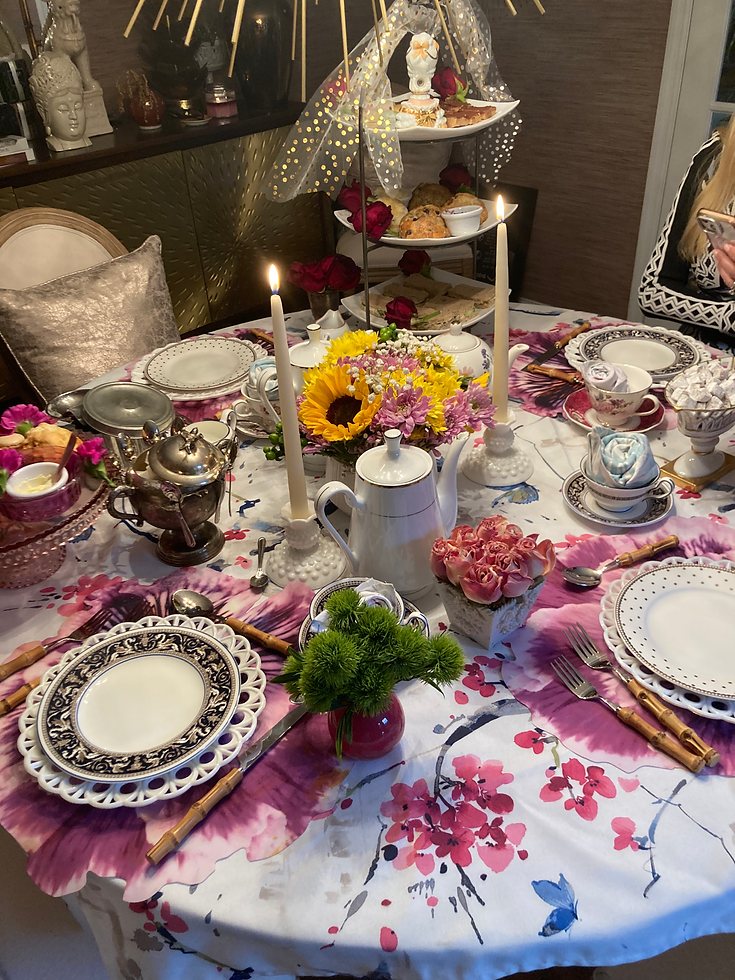
The Gentle Art of Afternoon Tea
In our always-on world, the idea of sitting down mid-afternoon for tea may feel like a luxury—or even a relic. But there’s a quiet power in the ritual of afternoon tea. Not the grab-a-to-go-cup kind, but the kind served with care, intention, and a little elegance.
Where it all began
Afternoon tea as we know it dates back to 1840s England, when Anna, the Duchess of Bedford, found herself feeling peckish around 4 p.m.—well before the fashionably late dinner hour. She began requesting a tray with tea, bread, and cakes, and soon started inviting friends to join her. It caught on. What began as a private habit evolved into a beloved social ritual among the upper classes, complete with fine china, dainty bites, and well-mannered conversation.
What’s on the table
A traditional afternoon tea includes three essentials:
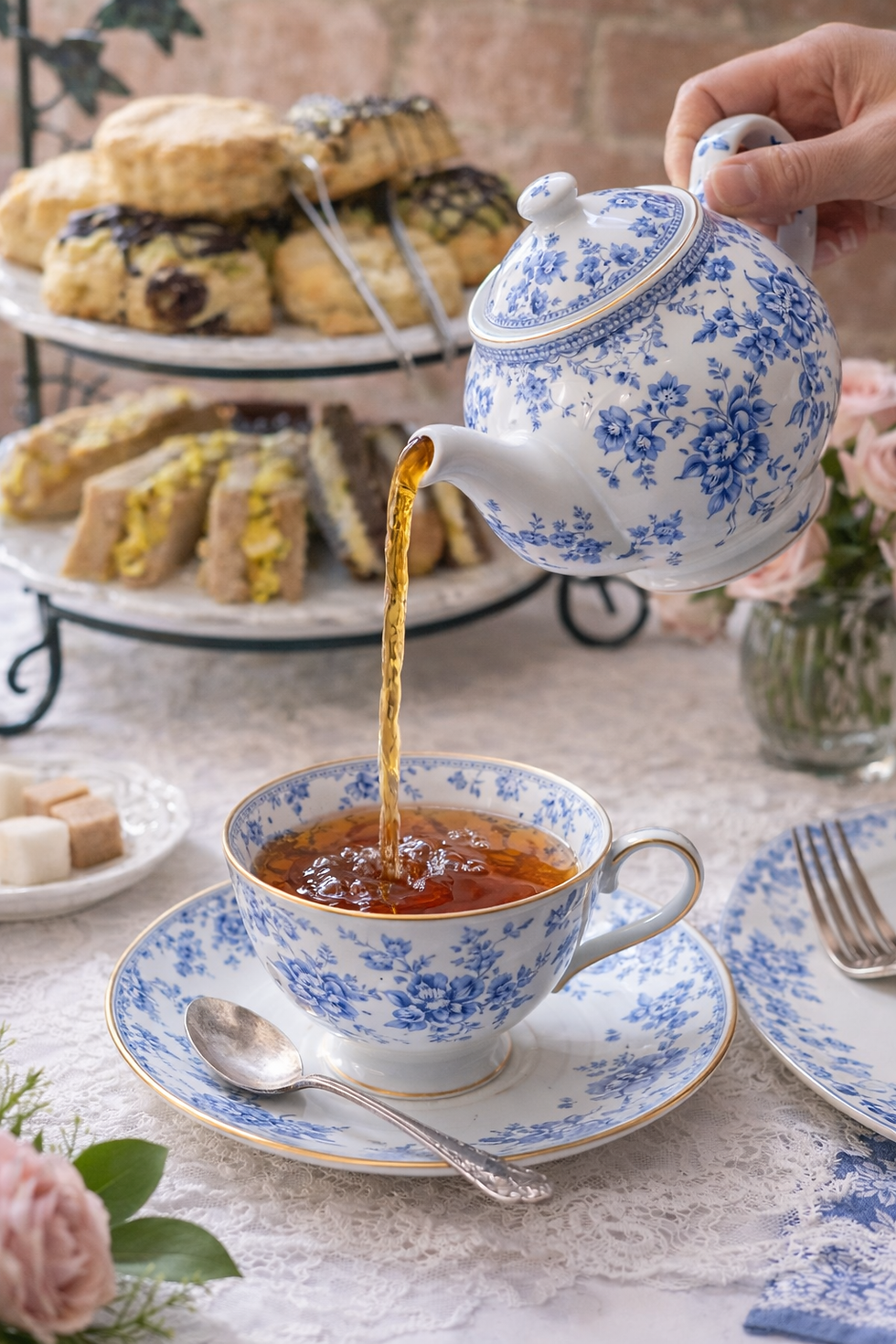
Savories, such as cucumber sandwiches or egg salad on soft bread
Scones, served warm with jam and clotted cream (a rich, silky dairy spread that deserves its own fan club)
Sweets, like macarons, cakes, or petit fours
All accompanied by a pot of tea—black, green, or herbal—poured slowly, and often with milk and sugar.
More than a meal
Afternoon tea is about more than food. It’s about pausing in the middle of the day, enjoying small indulgences, and sharing conversation. It invites you to slow down, savor, and connect.
Why we still gather today
Modern afternoon tea brings that tradition to new spaces—bookstores, garden patios, wine shops, even community centers—without losing the charm. At Tea with Meredith, we carry on the ritual not because it’s fancy, but because it’s meaningful. It’s a celebration of craft, conversation, and the joy of a shared table.
If you’ve never experienced a true afternoon tea, we hope you’ll be curious enough to try it—whether with us or somewhere else. It might just become your favorite way to spend an afternoon.


Comments